7 min read

Everything You Need To Know About Corporate Video Production

Everything You Need To Know About Corporate Video Production
14:25

From short-form social media reels to conference livestreams, corporate video production can significantly elevate your organization's brand storytelling and communication. The right creative choices can establish social proof, set clear expectations for your brand, and build recognition and trust with your intended audience.

Discover the benefits of corporate video production services to strategize your next video project.


What Is Corporate Video Production?

Corporate film production is the process of creating high-quality video content that serves your business's communication and brand goals for both internal and external objectives.

Internal corporate films such as training videos deliver crucial information about procedures, safety, and company changes, ensuring everyone is on the same page. External corporate films, such as product demos and social media ads, can help grab potential customers' attention and deliver your message quickly and clearly.

Corporate video content is critical in today's digital age, whether you hook potential clients using social media reels or develop attention-grabbing training videos tailored to your team's interests. The actual production process is also crucial, as your film's quality and cohesiveness significantly impact how long you'll hold people's attention and how effectively you'll convey your message.


Why Corporate Video Production Matters

From social media videos to virtual meetings, video has become a vital component of business operations and internal communication. Video marketing can reframe your message and help you reach significantly wider audiences. Plus, combining audio and visual elements, such as dialogue, voice-overs, and graphic text, allows you to expand upon your message for maximum clarity.

Video can also improve the communication of hybrid and virtual teams, recreating the feeling of meeting and talking in person without the need for a commute. Enhancing your video quality for virtual meetings and company livestreams, such as conferences, can help maintain attendees' attention and prevent important information from being missed.

High-quality corporate film production can also drive greater awareness and social proof of your offerings, helping you build brand trust and engagement. For example, product demos, customer testimonials, and influencer videos can show the benefits of your products or services in action. Videos that encourage viewers to comment or engage with your content can further build relationships and trust for greater long-term value.


Popular Types of Corporate Videos

Explore the following types of corporate film content to strategize your next project.


Explainer and Product Videos

Product and explainer videos break down your product or service using various visual elements, including demonstrations, graphic text, and animated blueprints and schematics. Many use stories of fictionalized or real-life customers to frame the video from the viewer's perspective, showcasing exactly how your brand and solutions can help them. They tell potential consumers exactly what to expect if they buy your product, making them ideal for social media and your website's product and service pages.


Customer Testimonials and Brand Stories

Customer testimonials provide crucial insights into your brand, product, or service from the perspectives of actual customers and clients. For example, if you offer business-to-business (B2B) software, testimonials from satisfied customers can explain how your solutions have met organizations' exact needs — not just on paper, but in real life.

Meanwhile, brand stories provide crucial insights into your organization from your perspective. They spotlight your business's mission, values, and greatest strengths to establish a clear brand identity, such as by spotlighting your company's history or the specific teams that bring your solutions to life.

Anthem pieces are often considered the "premium tier" of brand films. Rather than focusing on products, these short, cinematic films highlight your company's values, purpose, and mission. They tell viewers a bit about who you are and why they should choose your brand over the competition.


Training and Recruitment Videos

Recruitment and training videos make it easy for your internal teams to onboard new hires, adopt new practices, and adhere to training requirements. Additionally, training videos ensure everyone receives the same instructions, facilitating easier and more cohesive operations.

Your corporate video content should be unique to your business, highlighting your company culture and practices. A professional corporate video production company can help you hone in on your organization's greatest strengths and your film's central message.


Laying the Groundwork: Goals, Audience, and Strategy

Before you begin your project, you'll need to set measurable goals for your corporate video production.

Consider your specific brand objectives based on your unique audience and where they currently fall in the sales pipeline. For example, if you're still introducing yourself to your audience, focus on building brand awareness and recognition. If your audience already knows your brand name, focus more on brand films that build trust, loyalty, and credibility.

As you research your target audience, pay attention to their key demographics, preferred social media platforms, and the immediate needs your products or services will address. For instance, are you marketing to general consumers, frequent travelers, B2B organization leaders, or someone else entirely?

Learning as much as possible about your target audience, project goals, and market behavior will lay clear groundwork for your video marketing strategy, such as the best types of videos and social media platforms to use.


Key Stages of Corporate Video Production

Explore the three key stages of video production.


Pre-Production: Planning and Scriptwriting

During this stage, your production team develops a clear roadmap for the rest of your project. Key steps include:

  • Scripting and concept development: First, we'll develop, write, and revise your project's script based on your original concept, whether you're using a single voice-over or multiple actors with distinct dialogue.
  • Storyboarding and visual planning: Next, we'll develop storyboards and shot lists to visualize your final video. This establishes a clear, cohesive vision for the entire production team, making it easier to plan the types of equipment needed on the day of production.
  • Budgeting for equipment, talent, and locations: Once we determine what we're capturing, we'll establish a fixed budget for your project that allocates funds appropriately among departments. Key budget considerations include equipment, crew, talent, location fees, production days, art, catering, and post-production.
  • Choosing the right team or vendor: Working with a professional production team can significantly expand the opportunities available for your project while simplifying producers' workloads. Many corporate video production companies offer their own production crews, cameras, and equipment to help minimize overall costs.


Production: Capturing the Footage

Once everything is planned, you'll proceed with the actual corporate film production. How long this stage takes ultimately depends on your project — you can typically capture basic footage with just one location in a day or two, while in-depth productions may take weeks or more.

Production relies on a handful of key roles:

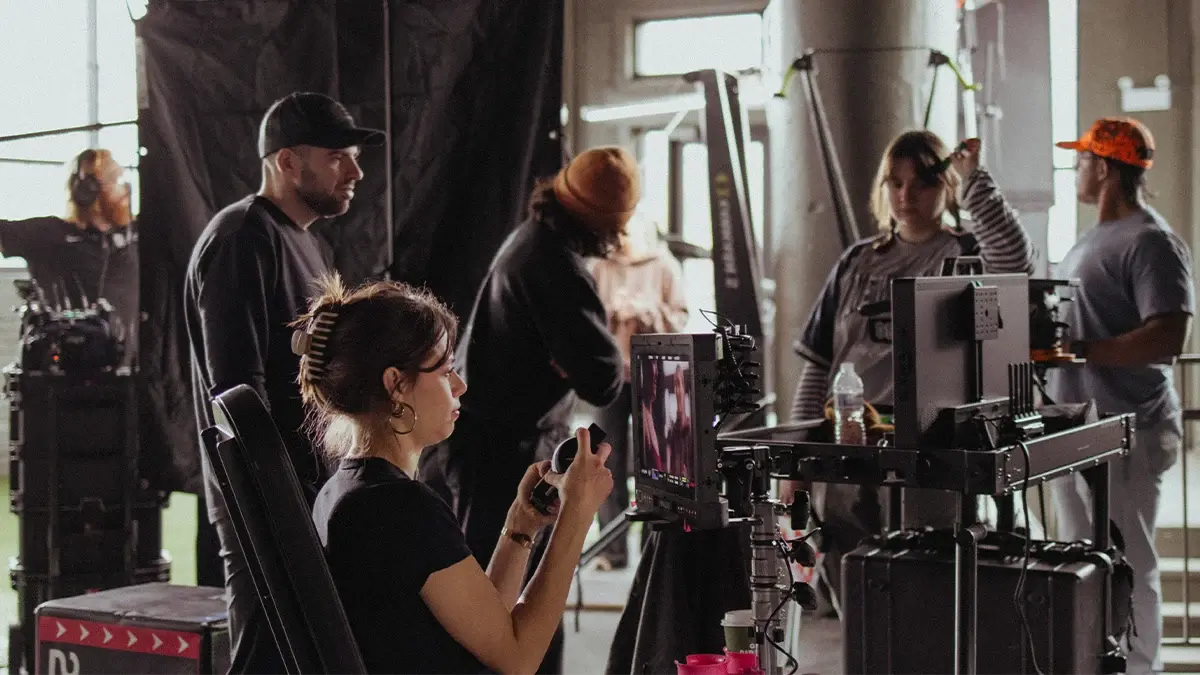
  • Producers oversee production on set to keep everything on track and aligned with the project's original mission and stakeholder input, even if everything is already planned.
  • Directors work with talent and most departments to capture footage as envisioned.
  • Talent includes your lovely actors and extras who appear on camera, often serving as the face of your brand identity.
  • The camera department, led by the Director of Photography, handles the on-screen visuals based on your storyboards and shot lists.
  • The art department handles set decorations, props, hair, makeup, and other on-screen visuals, maintaining continuity and honing in on your color palette.


Post-Production: Editing and Final Touches

Finally, you'll piece everything together in post-production, which covers multiple key steps:

  • Editing for story and pacing: Experienced video editors will carefully juxtapose your footage into a crisp video that aligns with your project goals and expected runtime. They'll review all the footage captured during production, use only the best options, and clean and recolor the footage, if necessary.
  • Adding graphics, music, and voice-overs: Graphic text, visual effects, and animations can further enhance your video's appearance and keep viewers engaged even longer. Voice-overs, music, and sound effects can then improve your video's audio for a more immersive and informative experience.
  • Revisions and final approvals: Most corporate videos require multiple revisions to achieve an ideal final product that aligns with your business and stakeholder goals. Only work with post-production teams that offer revisions, and thoroughly review video content before giving final approval.


How To Distribute and Promote Your Video

Corporate video production usually requires you to use at least one of the following distribution channels:

  • Owned channels, such as your website, mobile app, social media page, and email campaigns
  • Earned channels, such as social media feeds, reposts, and search engine visibility
  • Paid channels, such as paid promotions, streaming ads, and social media boosts

The best ways to share and promote your video depend on your target audience, type of video, and business goals. If you're unsure which channels best suit your project, consider adopting a handful of distribution strategies and monitoring your analytics to identify your best paths forward.


Measuring Success

Measuring your ROI and engagement metrics will help you understand how effectively you're reaching your target audience, including which strategies do and don't work. This will help you hone in on the best types of videos and platforms for your unique audience and your current brand goals.

Keep an eye on the following key metrics:

  • Video engagement: Likes, comments, shares, and views spotlight the videos that people watch and engage with the most. Monitoring all these metrics, rather than just one, gives you a more holistic understanding of how viewers feel about your videos, so you can refocus your content in future posts.
  • Watch duration: 2,000 people may have seen your Instagram Reel, but how many watched it through to your CTA? Monitoring your videos' average watch times helps you identify your best-performing video types and how much of your message your audience actually took away.
  • Conversions and clicks: Track links to keep count of how many times people use your link from a particular source, such as the number of clicks that stem from your TikTok bio. This can identify which platforms and videos drive the most engagement with each specific audience.


Should You Partner With a Corporate Video Production Company?

Whether you're still developing your concept or searching for dependable equipment and crews, you must know how to choose the right corporate video production company for your unique needs.

Partnering with an experienced team with diverse skill sets and portfolios can streamline your project and expand your production possibilities. Full-service production teams will guide you through each stage of the process, from concept to delivery, keeping every decision true to your brand goals.

Contact Charter to get started on your next corporate video production project.


Corporate Video Production FAQs


How much does corporate video production cost?

Corporate video production costs vary and scale with complexity. A simple single-day shoot often runs several thousand dollars, while multi-day narrative brand films can range anywhere from $50,000–$100,000 or more, with shoot days, crew, and post-production scope driving the difference.


How long should a corporate video be?

Most corporate videos are between 30 seconds and three minutes long, depending on the type of video. For instance, short-form social media ads should be under a minute long while delivering a concise message. Meanwhile, product demos, explainer videos, and testimonial videos can take more time to focus on the fine details.


What's the difference between a corporate video and a corporate film?

The terms "corporate video" and "corporate film" often refer to similar production projects — the difference comes down to execution and mindset. Corporate films are typically treated as higher-end than corporate videos and are usually associated with more cinematic visuals and engaging narratives.

The difference may be semantic, but it reminds everyone that they aren't just creating another social media post. Instead, they're building a story that represents the entire organization.


Can I create a corporate video in-house?

Of course, you can always develop corporate video content in-house, especially if your team already has creative experience and a great concept. After all, many smartphone cameras are powerful enough to capture professional-quality visuals and audio, and some of the best video editing software, such as DaVinci Resolve, is available for free. That said, your possibilities will be significantly limited if you don't work with a professional team and genuine video equipment.


Where should I publish my corporate video?

The best places to publish your corporate video content depend on your goals. Marketing videos can help your brand gain visibility on various social media platforms, including LinkedIn, YouTube, TikTok, and Instagram. Meanwhile, product demos and customer testimonials can make great additions to your website, especially for SEO.


About the Author
Drew English

Drew is the co-founder and CEO of Forge Virtual Studios. He frequently writes about the intersection of craftsmanship, creativity and technology in the film industry, as well as creative entrepreneurship. You can keep up with Drew's thoughts and other Forge updates by following him on LinkedIn.

Related posts

Pre-Production in Film: Why Strategy Determines the Final Outcome

Pre-Production in Film: Why Strategy Determines the Final Outcome

Film crews don't simply walk onto a set and improvise where to set the camera or what to record. Every film requires extensive pre-production...

Read More
What Are the Key Stages of Video Production?

What Are the Key Stages of Video Production?

Video production takes more than a camera and a good idea. Making an authentic and impactful brand film requires high-quality visuals, audio, and...
Read More
10 Visual Trends Changing Modern Brand Film Production

10 Visual Trends Changing Modern Brand Film Production

The current landscape of brand film production is all about social media, popular trends, and businesses' unique goals. Marketing directors are...

Read More